
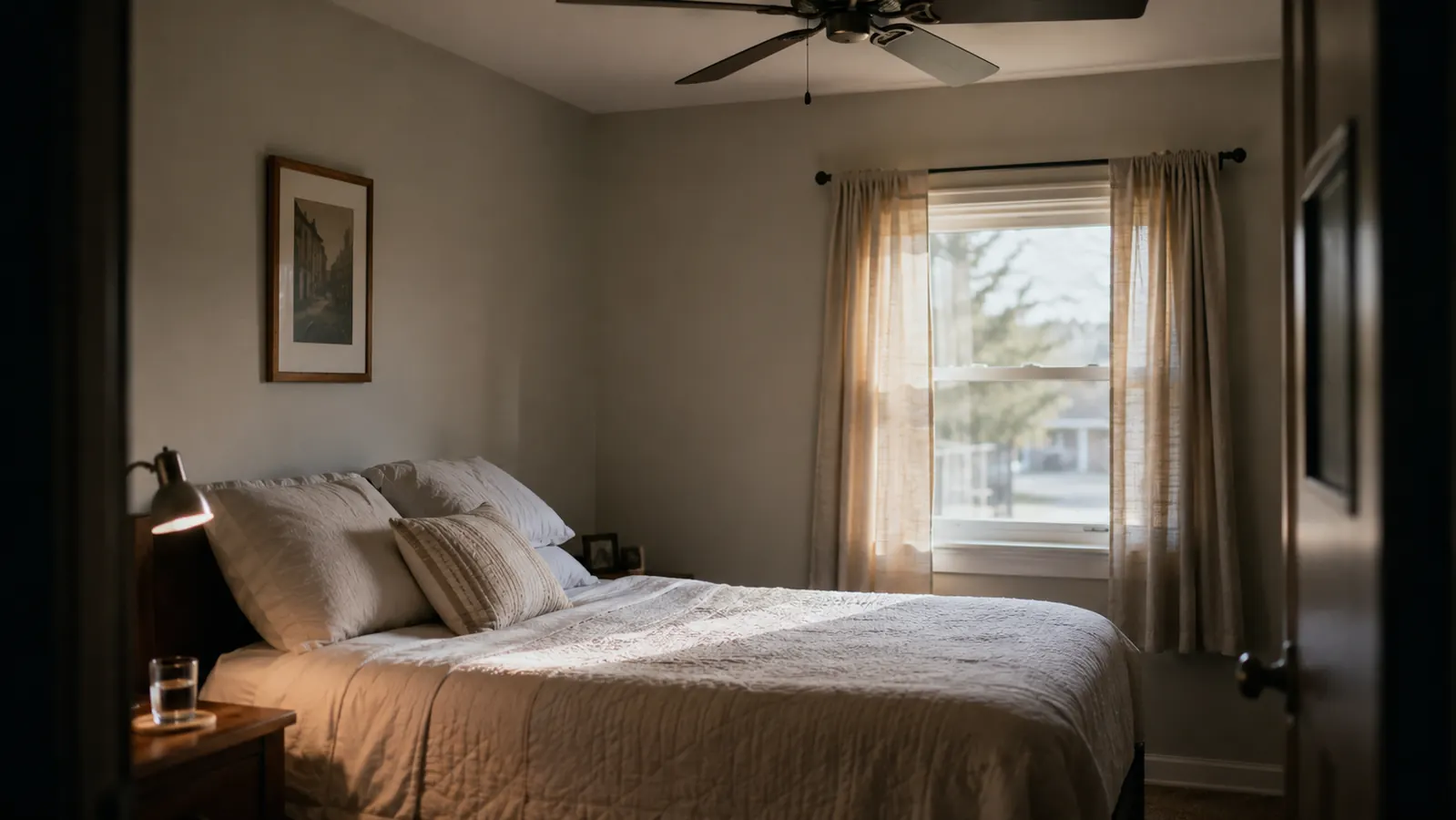
There is a particular kind of tired that comes from waking at 3 a.m. with the back of your neck damp and the bottom sheet stuck to your legs. I know it well. My flashes started at 49, and 51 to 52 was the bad stretch, three or four wake-ups a night with a spare sleep shirt folded on the nightstand. The first thing I blamed was the thermostat. Then the ceiling fan. Then I bought a mattress pad that promised to stay cool and instead gave me a new surface to sweat on.
What I worked out, slowly and mostly by accident, is that the layer touching your skin does more for how a bed feels at two in the morning than anything you can set on a wall panel. That is why I started with sheets. In February I bought the Bedsure full size sheet set, four pieces, double brushed microfiber, the cheapest item on my list and the first thing I tried. I have slept on that one set since, washed weekly, and I have opinions. Here is the order I would do it in if I were starting over tomorrow.
The cheapest change I made, and the one I would make first again
Four pieces, a 14 inch fitted pocket, machine washable on cold. It did not make my bed cold. It stopped the bed from holding heat, which turned out to be the half I could actually control.
Amazon Check Today's Price on Amazon →Five Steps, In the Order I Did Them
Step 1: Look at what is actually touching you, not at the thermostat
Before I bought anything, I sat on the edge of the bed and paid attention for one week. Not a science experiment, just a note on my phone each time I woke: what was damp, what was tangled, what I had kicked onto the floor. The pattern was not subtle. The old jersey knit cotton set was the problem. It was soft in October and miserable in February, because it held every degree my body gave off and handed it straight back.
Jersey knit is brushed and stretchy, which is why it feels nice and also why it clings. When you sweat, it sticks. When it sticks, you feel every inch of it. The Bedsure set is microfiber brushed on both sides, and the practical difference after a couple of weeks was that it stayed smooth against my skin instead of grabbing it. I still sweat. I just do not wake up welded to the bed.
One honest caveat, because I read the label and I assume you do too. These are polyester microfiber. They do not feel chilled to the touch the way hotel bedding does. What they do is fail to hold heat. If your goal is a bed that feels cold when you climb in, this is not that product. If your goal is to stop waking up in a puddle at two in the morning, it is a real change for a small amount of money, and it is where I would spend the first dollar.
Step 2: Measure the mattress, then ignore the word Full
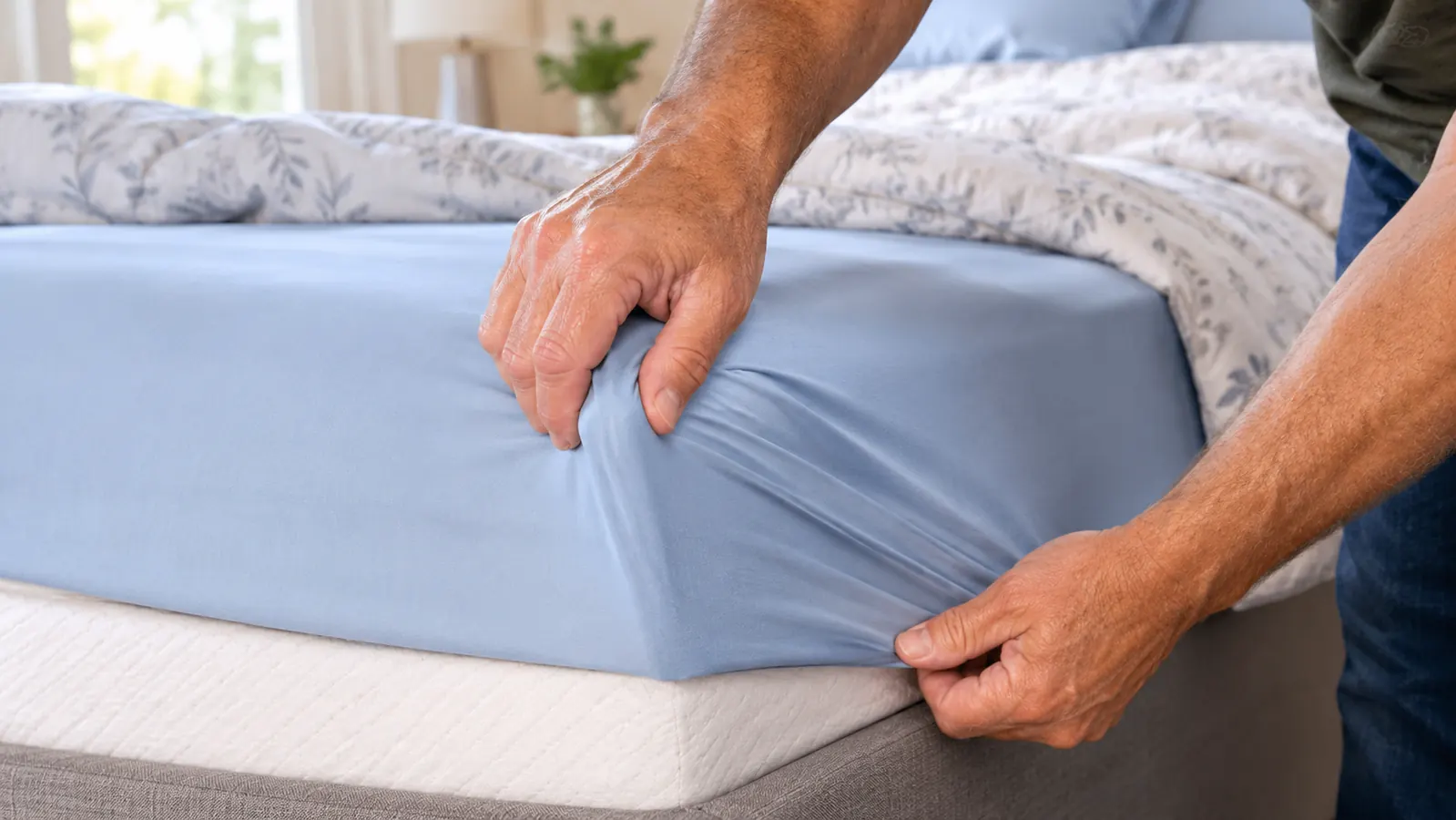
My bed is a full size and it is not a new one. Before I ordered, I measured the depth of the mattress, across the top and down the side, because a fitted sheet that pops off a corner at 3 a.m. is worse than no sheet at all. Mine came in at about 12 inches. The fitted sheet in this set has a 14 inch pocket, so there is room to pull it under and tuck it, and it has stayed tucked.
The set is four pieces, and the numbers matter more than the marketing: a fitted sheet at 54 by 75 inches with that 14 inch pocket, a flat sheet at 81 by 96, and two pillowcases at 20 by 30. If your mattress is deep, or you sleep on a pillow top with a foam layer on top of it, measure before you buy. Fourteen inches is generous for a standard full and less forgiving on a tall stack.
Two small things I checked that turned out to matter. The pillowcases have an envelope closure, so the pillow does not slide out of the open end while you are thrashing around at 3 a.m. And the set is OEKO-TEX certified, listed as 24.HCN.19195, which is a standard about chemicals against your skin rather than about temperature. I mention it because when you are sweating into a fabric for eight hours a night, it is a reasonable thing to look up before you spend anything.
Step 3: Wash them cold, dry them low, and stop treating them like cotton
They go in the machine on cold, once a week, with the rest of my lights, and they come out the same as they went in. I tumble them on low. Since February they have not pilled, shrunk, or faded, which is what the listing claims and what has held up in my laundry room. The color has not bled onto anything else in the drum.
The one thing I would not do is wash them hot to freshen them up. Hot water is the opposite of what you want from a sheet you bought because your bed sleeps warm. Cold water, a normal amount of detergent, low heat, and back on the bed. The whole set weighs a little over a kilogram according to the listing, so changing the bed is not a chore that leaves you sweating before you get in it.
And keep a spare set of something in the closet, even if it is not this one. The reason is not luxury. A night sweat means the sheet comes off the bed at three in the morning, and if there is nothing to put back on, you will either lie on a bare mattress or get back into the damp one. My old jersey set is the backup now. It is not good, but it is dry, and dry is the only job it has.
Step 4: Take a layer off the bed instead of adding a cooling gadget
The week I put the Bedsure set on, I also took the heavy polyester comforter off and folded it into the hall closet. For most of the year my bed is now a fitted sheet, a flat sheet, and nothing else until I am genuinely cold. That single change did more than any product I have bought, and it cost nothing.
In summer I slept under the flat sheet alone. In November I add a light quilt over my feet and leave my upper body under the sheet. If you are in the worst stretch of it, the fix is not a colder room, it is fewer layers to fight at 3 a.m. A stack of covers you have to rearrange while half asleep is what turns a two minute flash into a full waking.
I did buy a weighted blanket in late August, and it lies on top of the flat sheet rather than replacing it. That is the entire setup. Nothing on my bed is trying to cool me. The bed has simply stopped adding heat, and there is less to untangle when I sit up.
Step 5: Build a reset you can run half asleep
The wake-up is the part nobody warns you about. The flash itself lasts a couple of minutes. The lying there afterwards, damp and irritated, can cost you an hour. So I made the reset boring and identical every single time, because at 3 a.m. I am not capable of decisions.
Sheet pulled straight. Pillow turned to the dry side. Sleep shirt off, spare shirt on. A few swallows of water. Then I sit up on the edge of the bed, fully out from under the covers, with the neck fan on a middle speed for ten or fifteen minutes until my skin is dry. Then I lie back down. I do not check the clock and I do not check my phone, because both of those turn a ten minute wake-up into a ninety minute one, every time.
The white noise machine on the nightstand runs all night and covers the neighbor's dog and the sound of the central air kicking on, which are the two noises most likely to finish the job of waking me properly. None of this is treatment for anything. It is a routine for getting back to sleep, and the sheets are the part that means there is less to fix when I sit back down on the edge of the mattress.
What I Got Wrong First
The mattress pad was the expensive mistake. It was sold as breathable, and it probably was, in the sense that air could pass through it. It still sat between me and the mattress and held warmth like a second duvet. I took it off in March and I have never put it back on. If you already own one and your bed sleeps hot, try one night without it before you buy anything else.
The second mistake was assuming soft means cool. The jersey knit set was the softest bedding I owned and the worst bedding I owned, because brushed stretchy fabric is exactly what you do not want against damp skin. Softness and breathability are two different qualities and the label does not separate them for you. Now I read the fabric content first and the word soft second, which is backwards from how I shopped for thirty years.
What Else Helps
Two things, and neither of them costs anything if you already own them. The first is a fan moving air around the room rather than blasting your face. I already had a ceiling fan and I run it on low all night. That does more than any sheet can, because moving air pulls heat off skin. The second is rotation. If you already own cotton or linen, keep it in the mix for the hottest weeks and save the microfiber for the rest of the year.
I should be straight with you about what I can and cannot compare. I have never owned cotton percale sheets. I know percale from hotel stays and from product listings, nothing more, so I am not going to tell you it is better. I can tell you the Bedsure set is the one that stopped sticking to me, that it has survived ten months of weekly cold washes, and that I would buy it again before I would buy another gadget.
And then there is the part I am not qualified to help with. If you are waking four times a night and the sheets are clearly not the reason, go and talk to your doctor. Mine was the one who gave me the rough timeline, and knowing what I was in for helped more than any purchase. Sheets, fans, pillows and blankets are comfort and temperature. They are not medicine, and I have never pretended otherwise.
The sheets did not make my bed cold. They stopped it from holding heat, and that turned out to be the half I could actually do something about.
Start with the layer you will notice at 3 a.m.
Full size, four pieces, a 14 inch fitted pocket, two 20 by 30 pillowcases, machine washable on cold. The first thing I bought and still the first thing I would buy again.
Amazon See the Bedsure Sheet Set on Amazon →